

March 16, 2026 – There are many reasons why Filipinos are ashamed of their government these days. Currently headed by a dictator’s son and known generally by his nickname, President Bongbong Marcos is supported by 24 senators and 318 congressmen, many of them former movie stars or TV personalities, elected for their looks rather than brains, through vote buying and dynastic family support.
Daily newspapers report of public funds meant for the common people ending in politicians’ pockets instead, of government projects turning into corruption scandals. And while ordinary citizens struggle to have food to eat, politicians lavish themselves with luxuries that cannot be explained by their government salaries alone. They are fawned over by subordinates and shielded by supporters with speeches filled with promised joy but only bring grief and pain for all.
Thieving in government has become so lucrative that every Filipino wants to be a politician; easy because no educational merit or competence of any kind is required. This is why there are so many dynastic political families like the Dutertes – with father, sons and daughter all politicians for personal gain. Corruption by politicians has become so bad that PBBM pleaded in desperation at his 2025 state of the nation address, “Mahiya naman kayo”–For shame, Filipinos. For shame!
The biggest robbery in Philippine government history
The 2025 flood control projects scandal is the biggest corruption since the Philippines gained independence from the US in 1946. It was described by a senator, as "a grand larceny of ₱545.6 billion (US$11.08 billion) for “ghost” flood control projects with kickbacks and
commissions going to government officials and leaving only 30–40% of funds for actual substandard construction.
Towns and farms were ravaged by the 2025 typhoon season and hundreds of lives lost from flooding and landslides because of non-functioning floodgates, clogged canals, and poor infrastructure. The Corruption Perceptions Index, the leading global indicator of public sector corruption, ranks the Philippines in 2025 as #120 out of 182 countries, with #182—Somalia and South Sudan — as the most corrupt.
Prominent government officials have been named in the DPWH scandal and 89 were charged for receiving kickbacks from flood control project contractors but no one has been jailed despite countless investigations of corruption and irregularities. Some politicians are rumored to have left the country to enjoy their loot in Hong Kong while still receiving their government salaries while absent. So the graft goes on.
Former Philippine President on trial at global Court of Justice
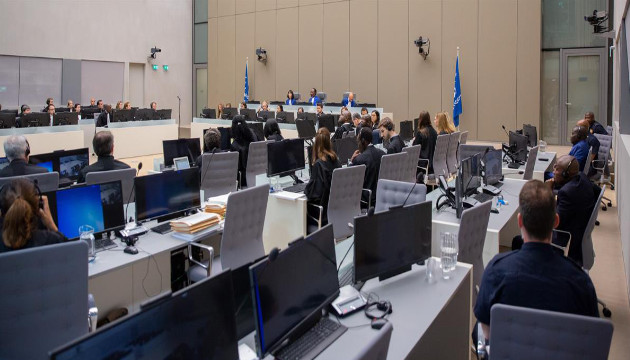
Starting this month, the world will hear about the day by day account of the ICC (International Criminal Court) trial at The Hague of former Philippine President Rodrigo Duterte.
The ICC’s investigation digs into alleged crimes against humanity linked to thousands of killings generated by Duterte’s anti-drug campaign. Prosecutors have charged him with three counts of crimes against humanity, citing at least 76 murders between 2013 and 2018 alone.
Duterte, like his idol Trump portrays himself as a macho strongman afraid of nobody, was arrested by ICC in Manila in March2025, flown directly to the Netherlands and has since been held at the ICC’s detention unit at Scheveningen Prison at The Hague.
During Duterte’s presidency (June 30, 2016 - June 30, 2022) thousands of innocent, helpless poor, and slum-dwelling Filipinos, including some children, suspected or simply “tagged” drug pushers were brutally murdered in broad daylight without due process.
For days on end, the prosecution and defense will argue at the ICC over jurisdictions, technicalities, EJK (extra judicial killing), self defense alibis, smoking guns, testimonies of facts and lies. Graphic photos such as the devastating image of a wife cradling her bloodied husband, shot dead by police in Pasay, which the Daily Inquirer ran on its front page in 2016, will be shown in court.
Eventually, the ICC will decide if Duterte committed a crime against humanity, convict him, and sentence him to rot in jail. But this shameful and violent period in Philippine history does not end there because it was not only Duterte who was on trial at the ICC this month.
Filipinos, including those in Canada, who heard about Duterte’s brutality but did not feel outrage and sadness over their President’s atrocities on the helpless poor are also on trial for “aiding and abetting” because of their numbness to the sufferings of their fellow men. Those Duterte supporters who cheered him on upon seeing piles of blood-soaked bodies on dingy streets are all as guilty as their murderous hero.
Several books and reports document the extrajudicial killings (EJKs) and violent war on drugs initiated by former Philippine President Duterte. The most notable among them is a memoir from a journalist who covered the killings directly. Some People Need Killing: A Memoir of Murder in My Country by Patricia Evangelista (2023) is a detailed, and critically acclaimed, account of the Philippine drug war. Evangelista, documents the thousands of Filipinos killed by police and vigilantes between 2016 and 2022, focusing on the stories of victims, their families, and the perpetrators themselves. The title of the book is from a quote from Duterte justifying his murders.
According to Patrick Radden Keefe, New York Times bestselling author of Empire of Pain,Evangelista’s book is a warning to the rest of the world about the true dangers of despotism—its nightmarish consequences and its terrible human cost. Attention Trump supporters!
For Filipinos everywhere, the only way to bring back respect for and trust in our government officials is for everyone to look deeply into their hearts and minds, find their sense of moral values of what is right or wrong then use their right to vote wisely in the 2028 elections. And to learn the lesson that ruthless strongman rule is not a macho virtue to admire but a shame to abhor because it leads to horrors that scream for justice that’s heard around the globe.
Editor of Canadian Filipino Net
Eleanor R. Laquian has written four best-selling books, and co-authored four others with husband Prod Laquian. She has served in various capacities at the University of British Columbia’s Institute of Asian Research as manager of administration and programs; editor and chair, publications committee; and primary researcher of the Asian Immigration to Canada project. She has a degree in journalism from Maryknoll College in the Philippines, and a master’s degree in public administration from the University of the Philippines. She did postgraduate studies at the School of Public Communications, Boston University in the U.S.
She has been researching and writing about Filipino immigration to Canada since 1969. For her Master's degree in Public Administration at the university of the Philippines, she conducted in 1972 the first, and up to now, the only nationwide survey of Filipinos in Canada. It was done by mailed questionnaires with self addressed stamped envelopes for replies and followed up by personal in depth interviews of respondents who agreed to be interviewed, Interviews were done on a two-week drive from Ottawa to Vancouver in the summer of '72.
Her Master's thesis was published in 1973 in Ottawa by the United Council of Filipino Associations in Canada. It was titled A Study of Filipino Immigrants in Canada, 1962 - 1972. As the primary researcher of UBC Institute of Asian Research immigration Project, she edited in 1998 a book titled The Silent Debate: Asian Immigration and Racism in Canada published by UBC. In 2005 she co-authored with her husband a book to update her MA thesis and titled it Seeking a Better Life Abroad: A Study of Filipinos in Canada 1957 - 2007. It was published in 2008 by Anvil Publishing in Manila.In 2023 she edited Indomitable Canadian Filipinos, a book on the 70-year history of Filipinos in Canada, published by Friesen Press in Manitoba, Canada.