December 1, 2025 — In 1521, Lapu-Lapu stood, a local chieftain, on the shores of Mactan in the Philippines and declared his community’s right to exist and live freely and fully.
More than 500 years later, the battle continues, but the enemy has shifted. It is no longer a foreign invader. Instead, it is the quiet violence of invisibility, intergenerational silence, and emotional displacement, especially within immigrant families navigating life in diaspora.
In 2025, we protect our communities not with spears, but with compassion.
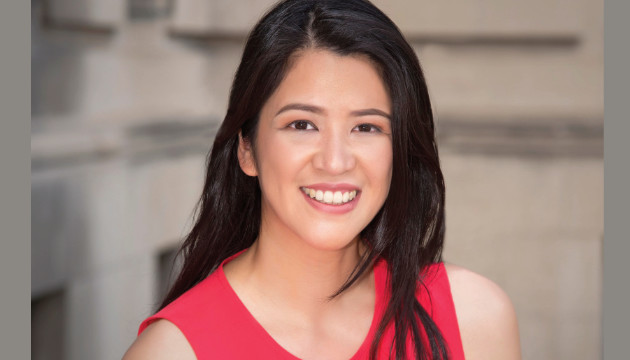
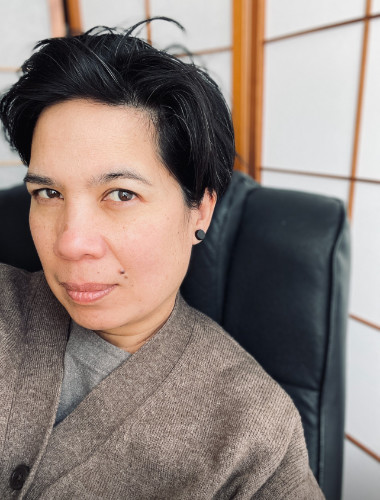 Of mixed Asian ancestry, including Filipino, Chinese and Vietnamese. Michelle Wing is a Vancouver-based social worker and clinical counsellor.The tragic incident when a driver crashed into the crowd during the Lapu-Lapu Day celebration on April, 2025 reignited long-standing conversations about grief, fear, and trauma. However, it also ignited something deeper: community-driven mental health initiatives, trauma-informed conversations, and collective mourning practices. Community care has evolved from being an abstract idea to a shared act of healing and standing up for one another.
“A lot of people have not addressed what they’re feeling because it is easy to dissociate or to shut down from the trauma that they experienced,” said Michelle Wing, a registered social worker and clinical counsellor at Pamati Counselling. She is a Filipinx/Chinese therapist, and her Visayan mother’s last name is Letrondo.
Their distress may manifest in subtle ways, such as disrupted sleep, recurring nightmares, appetite changes, persistent irritability, or unrecognized sadness, indicating depression. Even triggers that are only loosely linked to the traumatic event can reopen wounds from past experiences.
Wing had just left the festival fifteen minutes before the tragedy occurred. The incident, she said, exposed the mental health vulnerabilities that many Filipino families carry silently.
Filipinos are globally recognized as caregivers, known for nurturing others with compassion, strength and resilience. However, allowing ourselves to be cared for, especially during moments of collective trauma, is a radical act.
“We are such activists that we mobilize help so fast. How we responded to this was incredible, but we also need to be taken care of,” Wing added.
Programs like the Kapwa Strong Fund, supported by United Way BC, have provided essential relief through recovery grants, trauma services, and culturally relevant counselling. These efforts have fostered a sense of safety and validation for those who might otherwise feel unseen.
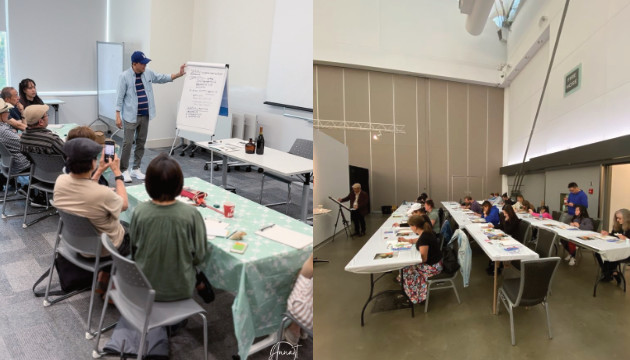
Multiple organizations responded quickly after the tragedy. A key part of Wing’s work involves healing circles. These gatherings allow participants to feel and express their emotions without judgment. They might include painting, writing poetry, or any other forms of art. There is always food, which she describes as the Filipino “love language” and our way of showing care when we come together as a community. As someone with Filipino, Chinese, and Vietnamese roots, Wing understands how layered trauma can be.
“For many immigrants, trauma is not unfamiliar,” she explained. “From martial law to migration, from political upheaval to personal loss, families carry unspoken wounds in their bones. But talking about these wounds? That’s where stigma enters.”
In some Filipino immigrant families, especially among the older generation, there is a strong cultural tendency to hide emotional pain. Showing vulnerability is often seen as a weakness, which causes many to silently carry their struggles in the name of strength and resilience.
This generational ethos, rooted in survival, has also created emotional barriers. That silence has become an inheritance, passed down through faith, migration, and the instinct not to burden others.
Breaking that silence, Wing emphasized, is one of the most revolutionary acts a person can undertake. “It means refusing to carry the burden alone. It means asking hard questions and holding space for real answers.”
One recurring theme she observed is survivor's guilt. Some ask, “Why was I spared?” Others feel they didn’t do enough. On the other side of the spectrum, some experience burnout from giving too much of themselves to help others in the community.
Healing, in this post-Lapu-Lapu moment, takes many forms. It might be a prayer whispered at a community vigil, a storytelling circle that bridges generations, an art exhibition, or a music event offering a culturally rooted space for connection and emotional release. It could also be a trauma support group conducted in Tagalog, Ilocano, or English. Or simply a message:
“Kumusta ka? How are you? Do you want to talk?”
Healing for immigrant families goes beyond just accessing therapy; it also involves cultural safety. It’s about knowing that our grief is understood without translation, that our pain is valid even if it doesn’t align with mainstream ideas of trauma, and that we can cry, pray, grieve, or rage in our mother tongue.
Programs such as the Kapwa Strong Fund have made this achievable.
“One hundred percent of donations will help provide immediate assistance, trauma support, and critical services to aid in community healing,” reads a statement from United Way BC.
Organizations across Canada, both Filipino and non-Filipino, came together in solidarity. The spirit of kapwa, the Filipino value of shared identity and collective responsibility, was clearly visible. It was evident in symposiums, prayer circles, donation drives, and messages of support from all levels of government.
This moment is more than just trauma. It’s about our recovery.
When we share our pain, offer support, and create space for grief, we carry forward Lapu-Lapu’s legacy. It’s not about fighting colonizers this time, but about confronting invisibility, silence, and emotional isolation.
Let us honour that spirit not only during festivals or in history books but also through the quiet, brave, and necessary work of caring for one another.
 About the author
Sandie Oreta Gillis earned her degree in Broadcast Communication from the University of the Philippines in 1981. She co-hosted a radio morning talk show at Radio Veritas in Manila before immigrating to Canada in 1983.
Sandie is the author of three books. She co-wrote SYM: The Power of Struggle, a biography of renowned artist Sofronio Y. Mendoza (SYM), with noted art critic Alfredo Roces. In Weaving Our Dreams: The Tboli People of the Philippines, she chronicled the rich cultural traditions of the Tboli people of Mindanao. Most recently, she wrote The Horse Soldier: A Wartime Secret, a story inspired by her mother’s memories of World War II in the Philippines.
As a freelance writer, she actively supports and promotes Philippine arts and culture, often writing about the country's rich heritage, history, and traditions. Gillis serves as a volunteer Board Director for the Dimasalang III International Artist Group and is one of the founding members of the Narragila Culture and Arts Foundation.