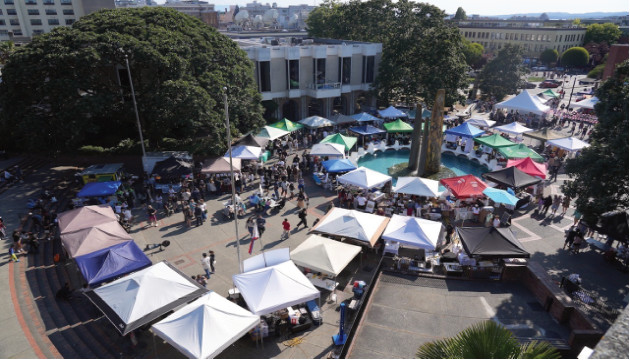
February 16, 2026 — It was to be the highlight of Jay Legaspi’s weekend. He was to attend the 2025 Lapu-Lapu Day Festival and watch Filipino-American hip-hop musician apl.de.ap. Going to the festival was a reward waiting for him later that day. At the last minute, he skipped it.
On that fateful April 26 evening, his phone began blowing up with messages: “Are you at Lapu-Lapu? What do you mean? What happened? Someone drove through. Some videos circling around, not censored, graphic.”
Another youth, Wyn Daquigan, echoed Legaspi’s experience. She started receiving messages from friends asking if she was at the festival. “We have group chats and people were messaging something happened. I think that’s how we all knew about it.”
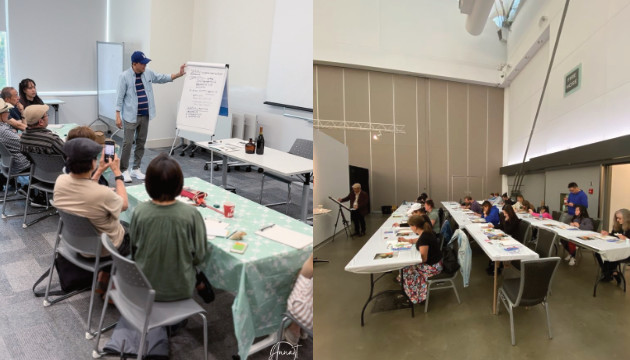
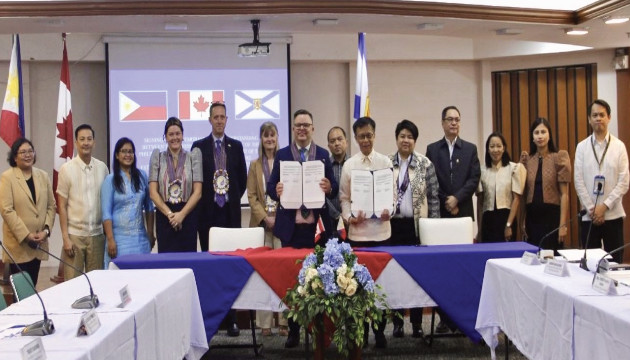
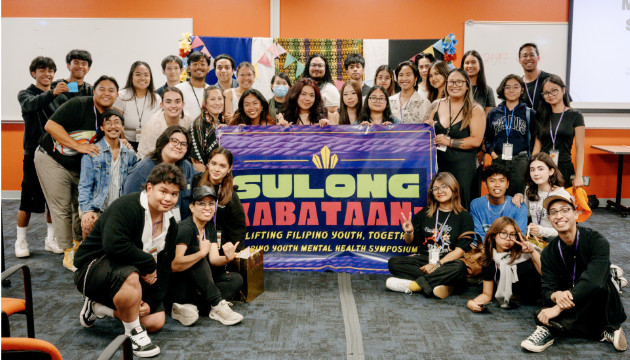 Regarded as the first Filipino youth mental health symposium in Metro Vancouver, Jay Legaspi (third from left) explained the “Sulong Kabataan” project was developed by and catered for the Filipino youth and supported by the UBC School of Nursing and the Mabuhay House Society.
Youth in action
Daquigan, a volunteer with Filipino youth organizations, instinctively realized the urgent need to help the victims. Together with others, they coordinated efforts to help that evening. “I think we started working on the resources around 12 midnight,” recalled Daquigan. “The first few people who started mobilizing and getting all the resources and getting all the information were not in the event. Social media is mabilis [fast].
Daquigan and her friends put together a spreadsheet and a website that listed every possible information needed. From food requests and transportation to list of the
missing persons’ names. The group provided a form for prospective volunteers, a list of gathering spaces for anyone looking to connect with practically anyone who had any helpful information, and a temporary daycare for people who were directly affected by the tragedy or involved in providing assistance. She explained, “We didn’t even have a name at first. We were just like, you know we are a lot of grassroot organizations naman [as well]. We have a lot of connections so why not just do this right away?”
Legaspi provided informed his family and helped friends find missing festival attendees. “During ‘sudden traumatic events,’ social media is a quick tool in disseminating information,” he explained.
Legaspi’s role in the recovery period came when he worked with the University of British Columbia’s Filipino Youth Mental Health program called “Sulong Kabataan”. Partnering with a local Filipino organization, the program aimed to help Filipino youth facing mental health issues associated with the attack. Most participants were high school students from the John Oliver Secondary School – the same place that provided space for some of the festival’s events.
“Our team was just very aware. This is the youth. You have to be safe with (the) youth. And just knowing that everyone comes from different backgrounds and different experiences and their own feelings towards Lapu-Lapu, we had to make sure that we were just going to be there, regardless, for the youth,” explained Legaspi.
Grief and hope
It didn’t take long for the tragedy and pain to find Legaspi. Shortly after, Legaspi found out that one of the fatalities was family friend Jendhel May Sico.
“I remember when Jendhel’s picture was being sent around and then people were like where is Jendhel? And then we’re all trying to find Jendhel. And then my cousin found out and told me like (why) does it (have) to happen,” recalled Legaspi.
Sico, who was in her late 20s, was with her fiancé and friends at the food-truck area when the attack happened. She and one of her friends died. Her fiancé is still recovering from his injuries. “I just know that everyone was affected. Everyone was affected because of the ties, because of just how big it was, and also the gravity of everything, too,” Legaspi recalled. “It wasn’t easy. But I would just say because I’m already such an over-self-aware person it was not as hard in comparison to others who don’t have the same kind of tools to be able move past something like Lapu-Lapu.”
It was different for Daquigan. Because of the urgency, most of their group failed to process their own emotions and grief. Most of them had to “pause” their own emotions until someone reminded them to do a “mental-health check” or “self-care check”. “We have a group chat. We take a picture of our dinner and send it to the group chat so people know you’re eating,” Daquigan recalled, and added, “I remember sa chat namin [in our chat], someone would just say: I’m just going to take a few minutes’ break because I just learned that one of my friends (got) hurt. So, I’ll just quickly cry and then we’re back again.”
Moving forward
Ten months after the tragedy, Daquigan and Legaspi have moved on from that painful experience, but have stayed in touch with the people and organizations they have worked with during the tragedy.
Daquigan, who is now based in Korea, said that the tragic stories she encountered still remain and does not think these will ever fully leave her. However, the actions she saw that came out after that dark episode are helpful. She believes the Filipino youth are stronger than what everyone thinks.
“When you look at the resources and events and community healing spaces that came out, they’re all organized by (the) youth. And then makikita mo na [you will see], our youth are actually here. They’re present. It’s just that for the past few years maybe we’re not giving them the space to lead. Kasi kaya nila [It’s because they can].”
Legaspi, who works in the mental health sector and continues to volunteer with the Filipino community, echoes additional tone. He felt that because of the Lapu-Lapu tragedy, the Filipino community in Vancouver has become part of a larger global community in Canada and gone now are the typical played-out image of a Filipino. “I feel like, once people started to know what was going on, and they weren’t Filipinos, they really wanted to understand who we were. Not just nurses, not just caregivers, not just people who can sing and dance. There’s more to that. There’s the love. There’s the big, huge amount of culture and the vibrant community we have here in B.C.”
Before signing off from Korea, Daquigan emphasized that if there was one good thing that came out from this sad chapter in the history of the Filipino community in Vancouver, it was the youth and how they stepped forward in this tragedy and made their actions count. “I think we are not just giving our youth the avenue to lead. Parang masyado natin silang gine-gatekeep [It seems we are gatekeeping them too much]. And so, when this happened, everyone was shocked. Everyone was grieving. But there’s many youths who are like – we’re ready.”
 About the Author
Israel Cando is a freelance journalist with extensive experience in broadcast journalism specifically on TV news gathering, TV magazine production, and radio news reporting. He has worked for Philippine networks ABS-CBN, GMA Network, ABC5 (now TV5), and was a special contributor for CNN International. Cando had also written for the political tabloid “Pinoy Times” during the administration of Philippine President Joseph Estrada.