

August 16, 2026 — In our August 1st editorial, The 25th Story, we called on our community to unite around a site for our future Community and Cultural Centre and advocated for the inclusion of a Wellness Wing.
Tahanan, in our language, means more than a physical dwelling.
It is home, a living mirror of our deep bonds and treasured values
and a space to heal, remember, and build hope together.
Lingering Impact of Tragedy
While the general idea for a future permanent Centre has already gained strong community support through the What We Heard Report, the need for a special Wellness Wing has not yet been fully discussed with the community or shown in the designs of the two competing proposals. The need became clear only after the 2025 Lapu-Lapu Day Festival tragedy. This event caused lasting pain beyond the immediate effects and showed how important the World Health Organization’s (WHO’s) complete view of health really is.
As recently as June 1, 2026, the Kapwa Storytelling Series showed that families are still dealing with loss, survivors have hidden pain, and our community is trying to find meaning after the tragedy. The need for ongoing mental and physical care is becoming more urgent. Our healing journey is only at its starting line.
Bringing WHO’s Vision to Life
WHO’s full view of health —“a state of complete physical, mental and social well-being, and not just the absence of disease or weakness”—recognizes that true wellness encompasses all parts of our lives—body, mind, and spirit. The proposed Wellness Wing reflects this idea by offering a special place where community members can get whole-person care. By basing our approach to wellness on WHO’s framework, we promise a future where everyone’s well-being is supported. WHO’s approach includes cultural safety that makes healing feel natural.
Optimal Size and Layout
The optimal size for a Wellness Wing is a minimum of 15,000 square feet; a measurement strictly grounded in the British Columbia Building Code standards. After adequate square footage is set aside for physical accessibility and regulatory compliance, the remainder is divided into three zones of equal size each: one for private, soundproof clinical suites; one for a lecture theatre hosting immigrant bridging and workforce development programs; and one for collective healing and university-partnered research spaces.
The layout features step-free entrances and exceptionally wide hallways, and a design that prioritizes privacy. Mental health suites are tucked behind a lively café atrium and cultural lounge. Visitors blend in as they arrive for coffee or art, check in quietly, and follow a one-way corridor to a private rear exit. They leave safely, never needing to look back.
Objective Evaluation Scorecard
A project of this scale is a national landmark. To guide this choice fairly and without favouritism, our community must evaluate all property proposals for the Centre against a strict scorecard of four objective metrics: structural capacity to hold this Wellness Wing; universal physical accessibility and direct proximity to rapid transit; financial strengths through university and federal partnerships; and a commitment to ongoing community consultation to keep the space responsive to real needs. This scorecard lifts the conversation above personal politics and focuses entirely on the WHO’s holistic health criteria.
Dimensions of Value
For the individual person, the Wellness Wing offers a private, culturally safe refuge that breaks down the barrier of hiya — stigma and shame—that has long kept our youth and elders from seeking mental health help. Utilizing a discreet, privacy-first design, visitors check in quietly, follow a one-way corridor, and exit through a discreet rear door, leaving safely and free from the weight of public judgment.
For our community as a whole, it becomes an anchor for education and nourishment, weaving together clinical care and grassroots efforts like Kusina to turn individual healing into collective strength.
What sets this project apart is its unwavering promise of universal inclusion. With step-free entrances and wide hallways, the Centre opens its doors wide to elders and people with disabilities from the very first day.
With its generous size, the Wellness Wing becomes a vibrant hub for education and health research. A dedicated 3,500-square-foot residency welcomes university partners like UBC and SFU, transforming the project into a national model. Postgraduate students offer world-class, culturally attuned care to our families at no cost, while researchers gather community insights to co-create guides and blueprints that can inspire all of Canada.
The Wing can be a vital training center for future first responders, empowering youth to spot distress early and enabling trauma survivors to become certified peer mentors. Partnerships with colleges will help immigrant healthcare professionals gain Canadian credentials. Students at all levels will find mentorship and resume-building opportunities within the Centre’s walls.
Some may worry that building an optimal wing means higher upfront costs. Yet, corporate sponsors and national grant agencies like Canadian Institutes of Health Research or the Social Sciences and Humanities Research Council are far more eager to support a groundbreaking health research incubator than a scaled-down office. A bold vision attracts the partnerships and funding needed, sparing our community from heavy fundraising burdens.
Looking to the future, the optimal layout reserves a 4,000- to 6,000-square-foot space for expansion, paving the way for a non-profit pharmacy or dental clinic to be added seamlessly in the years ahead.
More than a place for care and recovery, the Wellness Wing will become a living memorial for those we have lost and a shining beacon for survivors. It will honour our past while planting seeds of hope for the future.
Ultimately, this is a profound civic responsibility rooted in the bedrock of Canadian democracy. Section 27 of our Charter of Rights and Freedoms explicitly mandates the preservation and enhancement of Canada's multicultural heritage. True heritage preservation is impossible without health equity. True multiculturalism demands that our health systems adapt to our cultural realities, rather than forcing our community to suffer in silence. By building this optimal wing, we are breathing life into Section 27.
Decision-Making and Our Shared Promise
The final site selection for the Centre must be guided by legal stability, physical capacity, and centrality to the community most affected by tragedy. Missing critical funding windows is a risk we cannot afford.
Federal support coupled with provincial backing, establishes the two critical financial pillars. Rental income from clinical suites, philanthropy, and government health grants will ensure ongoing viability.
This innovative, self-sustaining model attracts major funders and philanthropists, who increasingly seek projects combining measurable impact with financial resilience.
Let us come together to create a state-of-the-art Wellness Wing that offers exceptional care to our community and stands as a legendary example of healthcare innovation for all of Canada—a source of great pride for our Canadian Filipino community in BC and beyond.
This is our shared promise: to create the one-of-a-kind Tahanan Wellness Wing in our Community and Cultural Centre—a living testament to our strength, compassion, and vision as a vibrant Filipino diaspora.
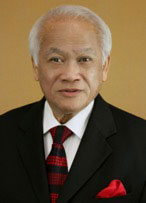
Editor's note: Dr. Rey D. Pagtakhan, P.C., O.M., LL.D., Sc.D., M.D. M.Sc. is a retired lung specialist, professor of child health, and former MP, Parliamentary Secretary to the Prime Minister, and cabinet minister. He graduated from the University of the Philippines, did postgraduate training and studies at the Children’s Hospitals of Washington University in St. Louis and the University of Manitoba in Winnipeg, and spent a sabbatical year as Visiting Professor at the University of Arizona Medical Center. He is the author of articles and chapters in medical journals and textbooks and columnist for community newsmagazines. Widely lectured in Canada and abroad, he spoke in June 2003 on “The Global Threat of New Infectious Diseases” at the G-8 Science Ministers/Advisors Carnegie Group Meeting in Berlin. He volunteers on the Advisory Council of Immigration Partnership Winnipeg and the Board of St. Paul’s College Foundation at the University of Manitoba.