
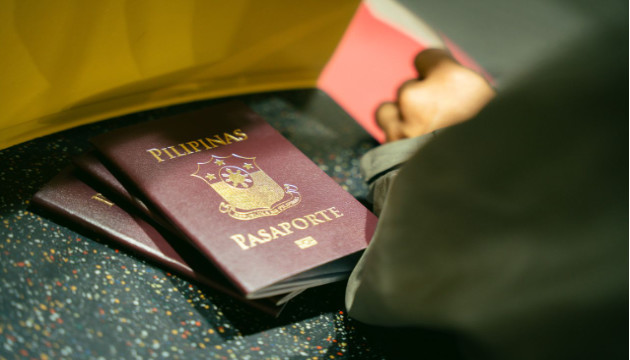
August 1, 2026 — Over 957,000 people in Canada reported Filipino ancestry in the 2021 Census.
By 2041, according to population projections, the number of Filipinos in the country could number from 1.7 million to 2.4 million.
The forecast is likely on target. This as one finding of a survey among Canadians show the Philippines among the favoured source countries of immigrants.
The overall poll forms part of a broad study prepared by the Bridging Divides research program at the Global Migration Institute of the Toronto Metropolitan University and the Environics Institute for Survey Research.
Released in July 2026 and titled “Canadian Diversity Study 2026”, it is based on an online survey of 6,818 adult Canadians between March 4 and April 24, 2026.
The Philippines was among the source countries cited by respondents when asked the question: “Which countries do you think Canada should give priority to, in terms of attracting new immigrants?”
For context, the study noted that 65 percent of respondents indicated that Canada should “take the best immigrants in terms of education and skills, regardless of which countries they come from”.
Meanwhile, 15 percent said that Canada should “favour immigrants from some countries and not from others”.
Additionally, one in five or 20 percent “cannot say which of the two options they agree with more”.
The study noted that among those who wish Canada to select immigrants based on where they are from, the top choices are in Europe as well as the United States.
The respondents were also asked: “And from which countries, if any, should Canada take steps to discourage new immigrants?”
To this question, the responses presented in the tables included in the study, did not include a mention of the Philippines.
Overall, “Canadian Diversity Study 2026” found that Canadians largely support multiculturalism.
“When asked what multiculturalism means to them, 64 percent of Canadians provide a response that describes multiculturalism positively, saying, for instance, that it means having an accepting society that welcomes people from different cultures,” the paper stated.
It noted that only six percent describe multiculturalism negatively. “However, 30 percent opt not to provide a response.”
While Canadians are mostly supportive of multiculturalism, the study also noted that a substantial 71 percent “agree that there is too much immigration”.
“The question is whether this concern about the current level of immigration signals opposition, not only to the number of newcomers that have arrived in recent years, but to the broader idea of Canada accepting immigrants, or to the changes in the racial and ethnic composition of Canadian society that recent immigration patterns have produced. On the whole, the evidence from this study suggests that this is not the case.”
Going back to the selection of immigrants, the study recalled that in the 1960s, Canada “shifted its approach to immigration selection away from one that favoured immigrants from specific countries of origin to one that favoured human capital”.
The paper explained that the shift to the so-called points system gave priority to immigrants with higher levels of education, in-demand skills, and proficiency in official language.
This change “led to the progressive diversification of the ethnic and racial backgrounds of new permanent residents in Canada”
“Among immigrants who arrived in Canada in the 1980s, for instance, 45 percent were born in Europe or the Americas; among more recent immigrants (those arriving between 2011 and 2021), this proportion is only 25 percent. Over the same period, the proportion born in Africa has increased from six to 15 percent, and the proportion both in Southern Asia has increased from nine to 22 percent.”
The shift in Canadian immigration policy is reflected in the immigration history of Filipinos.
“Immigration from Asian countries expanded after 1967, when Canada implemented a new points-based immigration system, and no longer used the place of birth as the basis of admission,” recalled a recent Statistics Canada study.
The study is titled “Portrait of the Filipino Populations in Canada: A Sociodemographic and Socioeconomic Analysis”.
Released on June 2, 2026, the paper also related that the points system was soon followed by the Immigration Act of 1976, which “explicitly promoted multiculturalism and family reunification”.
“These policy changes encouraged broader immigration from Asia, including the Philippines, which in 1967 was recognized for the first time as a separate reporting category in immigration statistics by the Department of Manpower and Immigration. Before this, Filipino immigrants were grouped under “Other Countries, not British,” while countries such as China, India, Japan and Pakistan were already distinguished.”