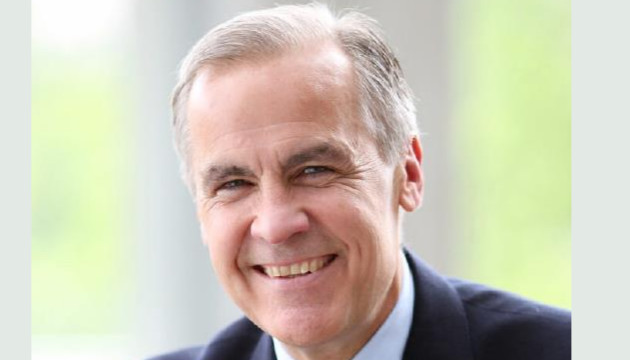
August 16, 2026 — Prime Minister Mark Carney and Philippine President Ferdinand Marcos Jr. recently announced that they have elevated bilateral relations to a “strategic partnership”.
In a joint statement following their meeting in Vancouver on July 2, 2026, the two leaders highlighted recent “milestones” leading to this development.
These include the signing of a Status of Visiting Forces Agreement (SOVFA) and a Mutual Logistics Support Arrangement (MLSA), the start of bilateral free trade negotiations, and increased diplomatic engagement.
So how will success be measured for this newly minted strategic partnership?
It’s a question that two Canadian Filipinos explored in an opinion piece in Open Canada, an online magazine by Canadian International Council.
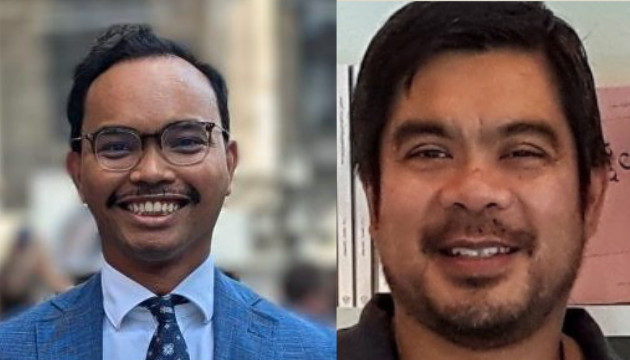
“Foreign policy is often framed as a choice between principles and interests. It should not be,” Marko de Guzman and Erik Martinez Kuhonta wrote in their piece dated July 30, 2026.
De Guzman is a public policy professional. He is a co-founder of Pinoys on Parliament, an annual national conference for Filipino Canadian youth leaders and a project of the group Kabangka (English translation: in the same boat together).
Kuhonta, for his part, is an associate professor of political science at the McGill University.
For De Guzman and Kuhonta, Canada’s strategic interests should be anchored on its supposed commitment to human rights and democratic values.
“A stronger Canada–Philippines strategic relationship should not come at the expense of Canada’s long-standing commitment to human rights, democratic governance, labour rights, and respect for the rule of law,” they wrote.
De Guzman and Kuhonta continued, “If the Strategic Partnership is to be credible, Canada must be prepared to pursue economic and security cooperation while continuing to raise difficult issues when necessary.”
As for these “difficult issues”, the two noted continuing concerns about the state of human rights in the Philippines.
For context, the Philippines has seen decades of fighting between the government and a national democratic movement led by the Communist Party of the Philippines (CPP) and its armed wing, the New People’s Army (NPA).
Poverty, unequal distribution of wealth, corruption in government and a host of other social grievances have fueled the insurgency.
De Guzman and Kuhonta noted that advocacy groups such as BAYAN (Bagong Alyansang Makabayan or the New Patriotic Alliance) and the International Coalition for Human Rights in the Philippines (ICHRP) have “criticized the increasing militarization of the Philippines”.
The two groups argue that the Marcos administration’s “alignment with foreign partners, including Canada, reinforces corruption, intensifies militarization, perpetuates human rights violations, and erodes national sovereignty”.
In an open letter to Carney dated July 23, 2026, ICHRP asserted that Canada’s partnership with the Philippines “must reflect Canadian values and human rights”.
“The recently established Canada–Philippines Strategic Partnership places significant emphasis on defence and security, trade, investment, energy, critical minerals, and other economic interests. Yet there are no comparable, enforceable commitments to human rights protections, independent oversight, and democratic accountability,” ICHRP wrote Carney.
ICHRP made a number of recommendations to Carney, including the establishment of “clear and measurable human rights benchmarks for military, security, development, and economic cooperation”.
De Guzman and Kohunta noted that the strategic partnership is tied to Canada’s “broader efforts to diversify trade, strengthen supply chains, expand cooperation in critical minerals and energy, and reinforce regional stability in the Indo-Pacific”.
“But current strategic interests should be carefully balanced with Canada’s earlier emphasis on progressive values, such as human rights.”
Moreover, “A mature Canada–Philippines partnership would expand economic co-operation while protecting labour rights; deepen security co-operation while preserving candid discussion of human rights and democratic accountability; and strengthen people-to-people ties by creating real pathways to professional opportunity for Filipino Canadians.”
De Guzman and Kohunta concluded, “The test is not whether Ottawa can announce more agreements. It is whether the partnership produces broadly shared gains while remaining anchored in democratic values.”